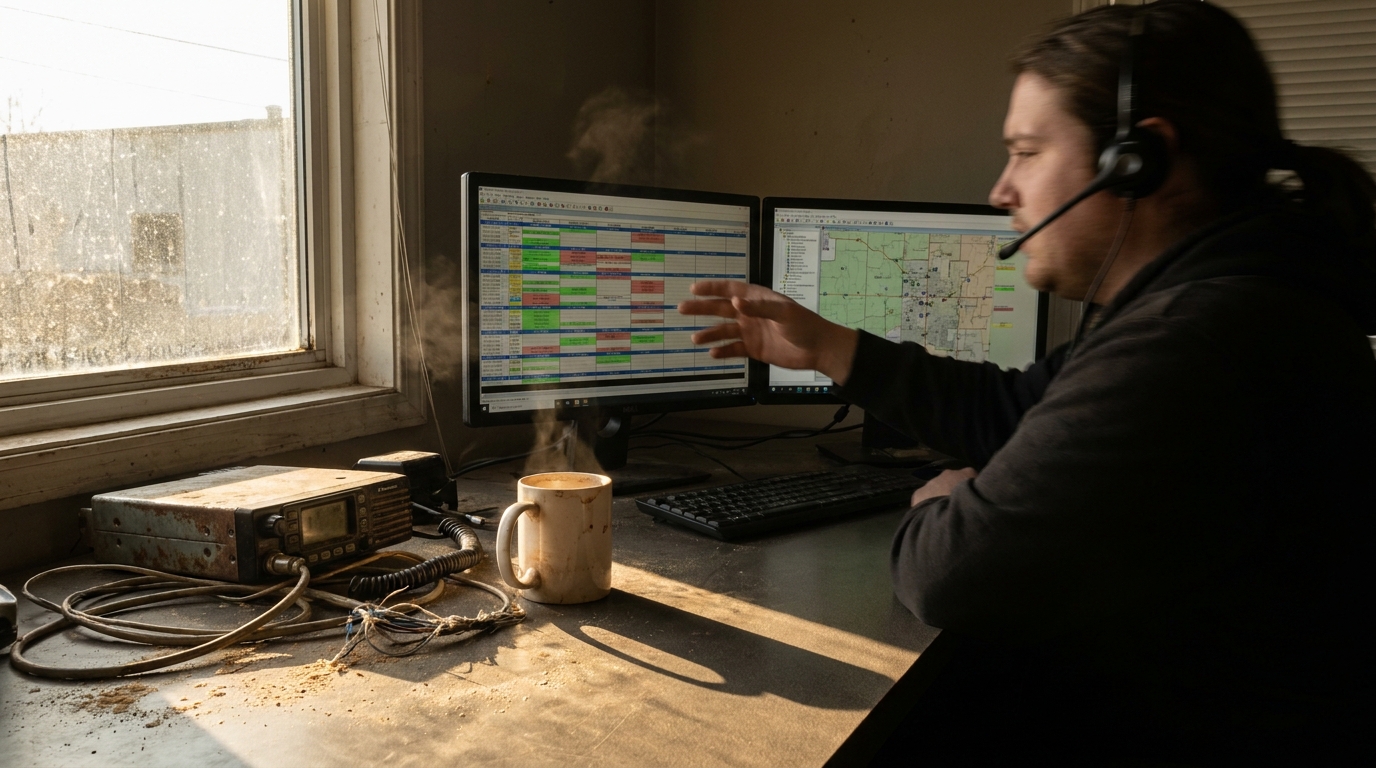

The Plumbing Scheduling Software Buying Guide (2026 Edition)
A practical buying guide for plumbing owners comparing scheduling tools, vendor questions, lock-in risks, and where AI dispatch support actually fits.

Choosing plumbing scheduling software is not really about buying a calendar. It is about deciding how calls become jobs, how technicians see the day, how dispatchers recover when the schedule breaks, and how much control the office keeps as the company grows. For plumbing owners and ops leaders, the best choice is the one that makes the messy parts of field work easier without forcing the business into a workflow it cannot sustain.
What Plumbing teams actually need from scheduling software
Plumbing work has a rhythm that generic scheduling tools rarely understand. A day can start with installs, maintenance, warranty work, and estimates, then shift when an emergency leak or no-hot-water call arrives. Good plumbing scheduling software has to show the dispatcher what is booked, who is available, where each technician is, and what kind of work fits the open slot.

The core need is operational clarity. Office staff should be able to turn a call into a job without retyping the same information across a calendar, dispatch board, invoice, and customer thread. Technicians should see the address, customer notes, job history, and next steps before they arrive. Managers should be able to spot overload before it becomes overtime or missed appointments.
This is also where a plumbing business software decision becomes broader than scheduling. If the schedule is disconnected from estimates, invoices, memberships, or service history, the team still ends up managing the business in side spreadsheets. Use neutral industry resources like PHCC to frame the operational realities of plumbing work, then judge vendors against the workflow your own team already runs every day.
Must-have vs nice-to-have features
Start with the must-haves. A serious plumbing dispatch setup needs drag-and-drop scheduling, technician availability, mobile job details, customer communication, job status updates, and a clean way to handle urgent calls. If those basics feel clumsy in a demo, the rest of the product will not save it.
The next tier is where a plumbing dispatch software comparison becomes useful. Look at route visibility, estimate-to-job conversion, recurring service, photo notes, office permissions, and reporting that shows which job types strain the schedule. For many shops, the best plumbing scheduling software is not the platform with the longest feature list; it is the one that keeps dispatch, field notes, and customer expectations aligned with the least office friction.
Nice-to-haves can still matter, but they should earn their place. Marketing tools, financing prompts, call tracking, inventory, and advanced dashboards are valuable only if the team will actually use them. If a vendor presents every add-on as essential, slow the conversation down. Ask what the daily workflow looks like with only the base plan, then decide what is truly required.
A useful buying exercise is to mark each feature as required, useful later, or distracting. Required features protect the workday: scheduling, dispatch visibility, field updates, customer messages, and job context. Useful-later features support growth once the team has adopted the basics. Distracting features look impressive in a demo but create extra setup before anyone has solved the scheduling problem.
Questions to ask every vendor
Vendor demos are designed to look smooth. Your job is to make them specific. Ask the salesperson to schedule a real plumbing scenario: an emergency call arrives, the first-choice technician is already booked, the customer needs a time window, and the dispatcher needs to move another job without losing the notes. Watch how many clicks it takes and where the system gets vague.

Can dispatchers see technician skills, zones, and availability in one view?
Can a technician update job status from the field without calling the office?
Can the office reschedule a job without breaking customer messages or invoice records?
Can reports separate emergency, estimate, maintenance, and install work?
What happens if the internet is weak at the job site?
Also ask about migration, support, and contract terms. A best plumbing software shortlist should include products your team can learn, not just products that demo well. If you are comparing a ServiceTitan alternative, or weighing housecall pro vs servicetitan, make the vendor show the exact workflow your dispatchers and technicians will repeat every day.
Red flags and lock-in traps
The first red flag is a platform that cannot explain its limits plainly. Every system has limits: mobile behavior, data exports, reporting depth, permissions, integrations, pricing structure, or setup time. A trustworthy vendor will tell you where the product fits and where it does not.
Another trap is buying around a future version of the company instead of the shop you run now. If your team is small, plumbing scheduling software for small business should be quick to adopt and easy to correct when dispatch changes. If the tool needs a full-time admin before it creates value, it may be too heavy for the current operation.
Be careful with data lock-in. Ask how customer records, job history, invoices, and attachments can be exported. Ask what happens if you cancel. If a vendor avoids the topic, treat that as part of the buying decision. Broad labor-market references such as the BLS Occupational Outlook page for plumbers and the broader BLS Occupational Outlook Handbook can help frame workforce context, but your software decision still has to protect the operating data your own team depends on.
Where AI scheduling fits in a modern Plumbing stack
AI belongs in the parts of scheduling where the office is already juggling tradeoffs: arrival windows, technician fit, geography, job urgency, and customer promises. It should help dispatchers see better options, not remove judgment from people who understand the business.
A practical AI-native system can suggest open slots, flag overloaded days, summarize job context, or help route work when a technician falls behind. That is different from treating AI as a magic replacement for operations. The useful question is how to improve plumbing scheduling software so it reduces repetitive coordination while leaving the dispatcher in control.
For buyers searching for a plumbing scheduling software alternative to ServiceTitan, AI can be part of the evaluation, but it should not be the only reason to switch. Look for clear controls, visible recommendations, and workflows your team can override. Market references like Statista may help teams understand broader software trends, but the product still has to prove itself in your dispatch board, on your phones, and inside your customer promises. It should also make renewal and cancellation terms easy to understand.
Decision checklist
Before you sign, run the choice through a simple checklist. Does the product handle the real kinds of plumbing jobs you book each week? Can dispatchers recover from schedule changes quickly? Can technicians use it from the field without extra calls? Does it keep customer communication, job notes, and billing context connected?
Then test the language around your search. If you are looking for best plumbing scheduling software, define what best means for your shop: fastest adoption, strongest dispatch board, cleanest mobile experience, broadest office suite, or easiest growth path. If someone sells you plumbing scheduling software 2026 as a label, ask what actually changed in the workflow. If you see phrases like plumbing scheduling software cost, plumbing scheduling software examples, plumbing scheduling software tips, or even the awkward duplicate phrase plumbing scheduling software software, translate them back into the same question: will this tool make the schedule clearer tomorrow morning?
The right platform should feel less like a forced transformation and more like a better operating habit. It should give the office a clean dispatch view, give technicians the context they need, and give owners enough visibility to improve the business without micromanaging every call.
#Plumbing#BuyingGuide#Software#FieldService#Trades#SkilledTrades#HomeServices#BlueCollar#FieldOps#SmallBusiness#dispatch#scheduling#AI#automation#SaaS#B2B#Productivity