
What Is Truck Roll? Definition, Formula, and Why It Matters
A plain-English field service glossary entry for truck roll: what it means, how to count it, and how dispatch teams use it to improve routing and preparation.

A truck roll is any job that sends a technician, crew, or service vehicle from the office or yard to a customer site. In field service, the phrase usually shows up when a dispatcher is asking a simple operational question: did this issue truly need someone on the road, and if it did, was that visit planned well enough to make the trip count?
That makes the term useful for HVAC, plumbing, electrical, cleaning, landscaping, and facilities teams. It gives office staff, owners, and field leads a shared way to talk about wasted drive time, repeat visits, incomplete diagnosis, and the difference between a clean dispatch and a job that bounced around the calendar.
Truck Roll: plain-English definition
A truck roll is a dispatched field visit. If a technician leaves for a customer location, that visit is a truck roll whether the vehicle is a van, pickup, or personal car. The term is dispatch terminology, not a literal rule about trucks.
In a field service glossary, the cleanest definition is: one truck roll equals one dispatched trip to perform, inspect, diagnose, quote, repair, maintain, or verify work at a site. That can include a first visit, a return visit, an emergency call, a warranty visit, or a follow-up created because the first appointment did not resolve the job.
The phrase is often used when comparing office decisions with field outcomes. A business might ask whether a phone call, better intake question, remote photo, part check, or tighter schedule could have prevented an unnecessary roll. It might also ask whether a truck roll was necessary but poorly prepared.
What it does not measure by itself is quality. A low truck-roll count is not automatically good if customers wait longer, technicians feel rushed, or jobs are closed before they are actually solved. The useful question is whether each dispatched trip had enough context, parts, timing, and routing support to justify the visit.
Why it matters in field service
Truck rolls matter because field work is constrained work. A technician can only be in one place at one time. Every extra trip competes with booked jobs, arrival windows, emergency calls, paperwork, callbacks, and the drive time already sitting between stops.

For a small business, one unnecessary visit can create more than one problem. It can push the next appointment later, force dispatch to reshuffle the board, create an awkward customer conversation, and leave the technician trying to make up time in the field. That is why truck roll for small business is not just a finance term. It is a daily scheduling term.
The term also gives teams a neutral way to discuss process. Instead of blaming a dispatcher, salesperson, or technician, the office can ask where the handoff lost detail. Was the problem described clearly? Did the schedule leave enough travel time? Were parts, skills, access notes, and customer expectations visible before the visit?
That is where truck roll tips usually start: improve the information before dispatch, protect the schedule from wishful thinking, and treat repeat visits as signals. Broad labor and industry context can be checked through sources such as the BLS Occupational Outlook Handbook, but the operational lesson is local: the best truck roll is the one that is necessary, prepared, and placed on the route with intent.
How it's calculated or applied
The simplest formula is straightforward: truck rolls equal the number of dispatched site visits in the period you are measuring. If a technician is sent to ten customer locations in a day, that is ten truck rolls. If one customer requires a return visit tomorrow, that return is another roll.
Most teams apply the idea with a few supporting views rather than one perfect score. They may look at truck rolls per completed job, repeat truck rolls, emergency truck rolls, first-visit resolution, or truck rolls by job type. Those views help separate healthy workload from avoidable motion.
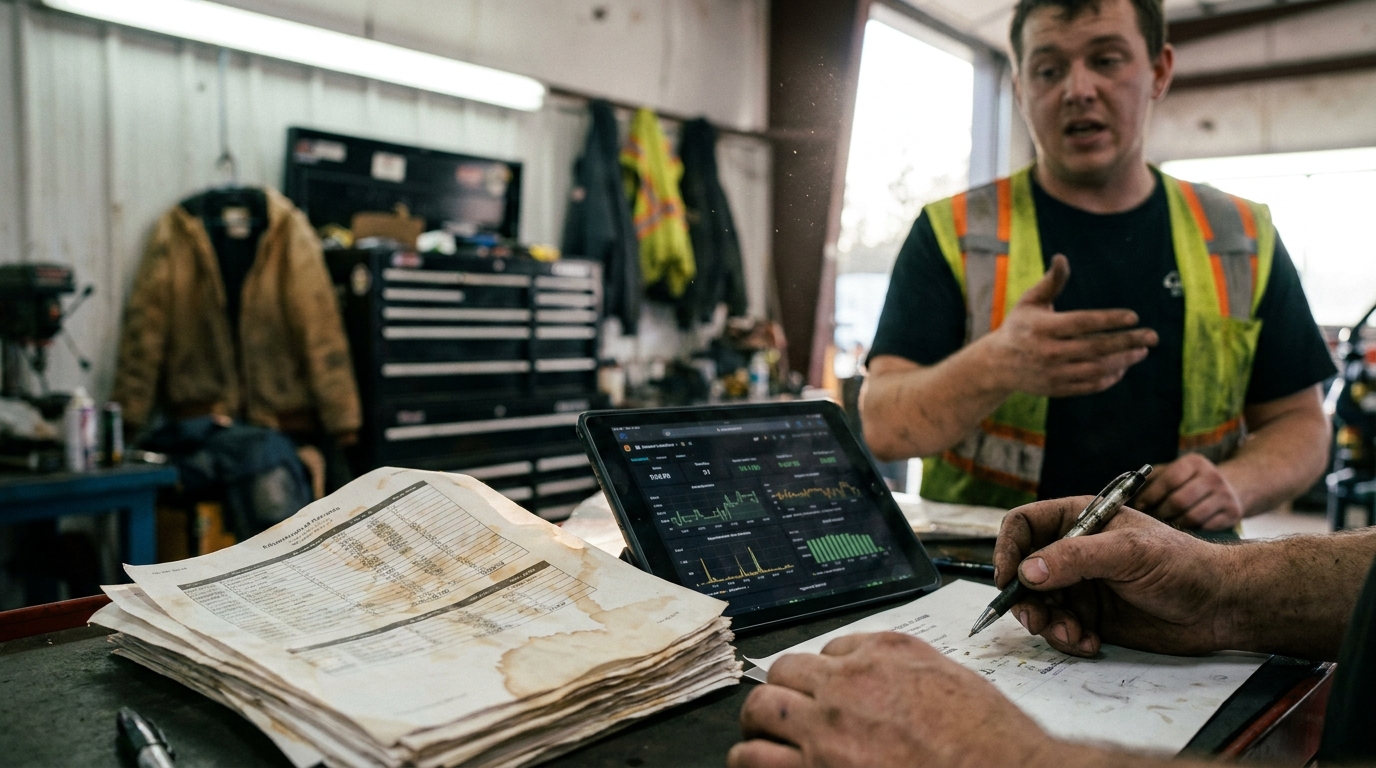
A software report can show the count, but the count needs interpretation. A high number may simply mean the team is busy. A lower number may reflect better triage, but it may also reflect slower booking or work that is being deferred. This is why a glossary metric should be paired with notes from dispatch, technician feedback, and job outcomes.
When people search for truck roll cost, they are usually trying to put a dollar figure around the trip. That can be useful, but the article brief does not provide a cost number, so this definition should stay qualitative: cost can include travel time, fuel, technician availability, schedule disruption, parts readiness, admin follow-up, and customer confidence. Market and industry data services such as Statista and IBISWorld may help with broader business research, but your own dispatch history is the better place to understand your actual pattern.
A worked example
Imagine a residential HVAC office receives a no-cooling call. The customer says the system is running but the house is not cooling. The dispatcher books the next available technician, but the intake note does not capture the unit age, error code, filter condition, access instructions, or whether the customer can send a photo of the thermostat and outdoor unit.

The technician arrives, discovers that the likely part is not on the van, and schedules a return. The first visit is one truck roll. The return visit is a second truck roll. If the second visit could have been avoided with better intake, a parts check, or a clearer diagnostic step, the business has found a process problem.
Now compare that with a cleaner version. The dispatcher asks a few standard questions, attaches customer photos, confirms access, and books the job with the right skill and inventory note. The technician still goes on-site, so there is still a truck roll. But this time the trip is prepared, the customer expectation is clearer, and the schedule is less likely to absorb a preventable return.
This is also where truck roll software can help if it supports the actual workflow. The point is not to chase a magic dashboard. The point is to connect intake, dispatch, technician routing, parts awareness, and customer notes so the office can see why a visit was needed and what would make the next one cleaner.
How Crisphive treats it
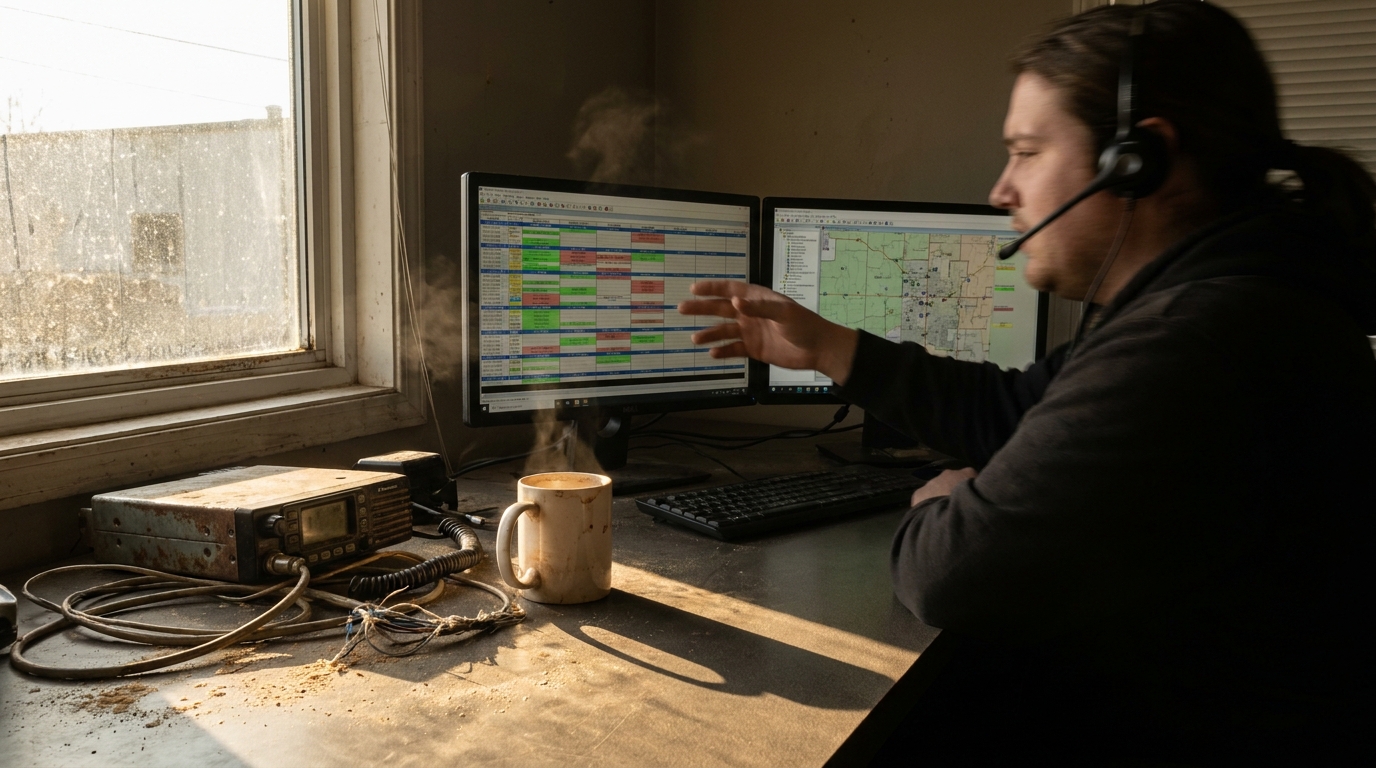
Crisphive treats a truck roll as an operational event inside the schedule, not as an isolated accounting label. The important context is the job, technician, route, customer window, handoff notes, and constraints around the visit.
That matters because a dispatcher rarely needs another disconnected metric. They need the schedule to show which decisions create pressure. If a job is placed at the wrong time, assigned to the wrong skill set, or squeezed between distant stops, the truck roll count alone will not explain the mess. The surrounding schedule will.
This is where comparison searches such as ServiceTitan alternative, Jobber alternative, and ServiceTitan truck tend to miss the deeper issue. A team may compare tools because the dispatch board feels hard to manage, but the real need is more specific: can the system make constraints visible before the roll happens?
For Crisphive, how to improve truck roll performance starts with better planning, even when a team arrives through a truck roll 2026 search and only wants a quick definition: cleaner intake, fewer preventable handoff gaps, tighter dispatch logic, and technician routing that respects the day as it actually unfolds. It is less about declaring every extra visit bad and more about helping the office spot which visits were avoidable, underprepared, or poorly placed.
Related terms
Several related terms help make truck roll examples easier to discuss. First-visit resolution describes whether the job was solved on the first dispatched visit. A callback is a return caused by an unresolved or recurring issue. Dispatch is the act of assigning and sending the technician. Technician routing is the sequence and geography of the day. A service window is the promised arrival range given to the customer.
Those terms keep the conversation practical. If repeat rolls are climbing, the answer may sit in diagnosis, parts, routing, customer intake, training, or schedule pressure. If emergency rolls are disrupting planned work, the answer may be capacity planning or a clearer triage process. If arrival windows keep slipping, the issue may be route design rather than technician effort.
As a field service glossary term, truck roll is useful because it is plain. It names the moment the business commits real field capacity to a customer site. Used carefully, it helps teams ask better questions: why did we send someone, what did they know before they left, what happened on-site, and what should change before the next dispatch?
#Glossary#Definition#FieldService#Data#IndustryInsights#Trends#Leadership#FieldOps#SmallBusiness#dispatch#scheduling#AI#automation#SaaS#B2B#Productivity