
HVAC KPIs and Benchmarks: The Numbers to Track in 2026
Track the HVAC KPIs that connect revenue, callbacks, technician time, and scheduling quality without turning your dashboard into noise.

HVAC KPIs only help when they describe the day your technicians, dispatchers, and customers actually live. For an HVAC owner or operations lead in 2026, the useful numbers are not vanity totals; they are the signals that show whether the team is booking the right work, routing it cleanly, finishing jobs without churn, and turning technician time into dependable revenue. This guide keeps the frame practical: what to track, how to read benchmark ranges without pretending every shop is the same, and how scheduling quality moves each number.
The 6 KPIs every HVAC operation should track
Start with six numbers that connect the office, the truck, and the customer. First is booked revenue, because it shows whether demand is turning into scheduled work. Second is completed revenue, because an HVAC business only feels healthy when jobs close cleanly. Third is first-time completion, which exposes whether the right technician, part, and time window came together. Fourth is average response time, especially for no-heat, no-cool, and high-priority calls. Fifth is technician utilization, the practical split between paid work and everything around it. Sixth is callback rate, because repeat visits drain capacity and trust.
These are the best HVAC KPIs because they are hard to fake. They also work as HVAC KPIs examples for a small team that does not want a giant reporting project. Associations and trade references such as ACCA can sit beside your own data, but the operating truth still comes from jobs, routes, and closeout notes.
Keep the first dashboard deliberately plain. Each KPI should have an owner, a refresh rhythm, and a threshold that triggers a conversation. If nobody owns response time, it becomes a complaint. If nobody owns callback rate, it becomes a technician issue instead of a process issue. Ownership turns a metric from a report into a habit.
Benchmark ranges: what good looks like
HVAC benchmarks are useful only when they are treated as ranges, not commandments. A residential replacement crew, a commercial maintenance team, and a mixed service shop can all be well run while showing different numbers. Seasonality matters too: peak cooling weeks, shoulder-season tuneups, emergency work, and planned installs put different pressure on the same dashboard.
The better question is whether your numbers are moving in the right direction for your model. If first-time completion improves while callback rate falls, that is a stronger sign than chasing someone else's target. If response time improves but completed revenue drops, the team may be taking too many low-value jobs or cutting travel in a way that leaves capacity unused.
Use benchmark references carefully. A source like AHRI can help frame the broader HVAC environment, while your dispatch board shows the decisions that made yesterday profitable or messy. That is the practical heart of HVAC KPIs for small business: compare enough to stay honest, but manage from your own route patterns.
A healthy benchmark review separates three questions. What is normal for our mix of work? What changed since the last season? What did scheduling control? That frame keeps the team from blaming weather, demand, or technicians for every miss. It also keeps leaders from copying a target that belongs to a different business model.
Windshield time vs wrench time in HVAC
Field service metrics get clearer when you separate windshield time from wrench time. Windshield time is the travel, parking, searching, waiting, and backtracking around the job. Wrench time is the hands-on work the customer actually values. Neither number is moral by itself. A technician has to drive. Parts have to move. Emergency calls interrupt tidy plans. The problem is when travel grows because dispatch decisions are being made with incomplete context.

This is where HVAC dispatch shows up in the financials. A route that looks full on a calendar can still waste the day if the jobs are scattered, the skills are mismatched, or the technician with the right certification is sent across town twice. Workforce context from places like the BLS Occupational Outlook Handbook can help leaders think about labor pressure, but the controllable lever is the schedule in front of them.
If your team is comparing hvac business software, do not stop at whether it records time. Ask whether it helps explain why time is being lost. That distinction matters in any ServiceTitan alternative conversation, and it is central when someone searches for a fieldedge vs servicetitan comparison.
The useful review is often simple: take a week of completed jobs, map the route order, and mark every avoidable handoff. Look for return trips, late starts, long gaps between nearby calls, and jobs that needed a different skill set. That exercise turns windshield time from a vague frustration into a dispatch pattern the office can fix.
How scheduling quality moves each metric
Scheduling quality is not a side feature; it is the operating lever behind the numbers. Better job sequencing can raise completed revenue without asking technicians to work longer days. Better skill matching can improve first-time completion. Better arrival windows can reduce customer frustration before a review or callback happens. Better route density can protect utilization without rushing the work itself.
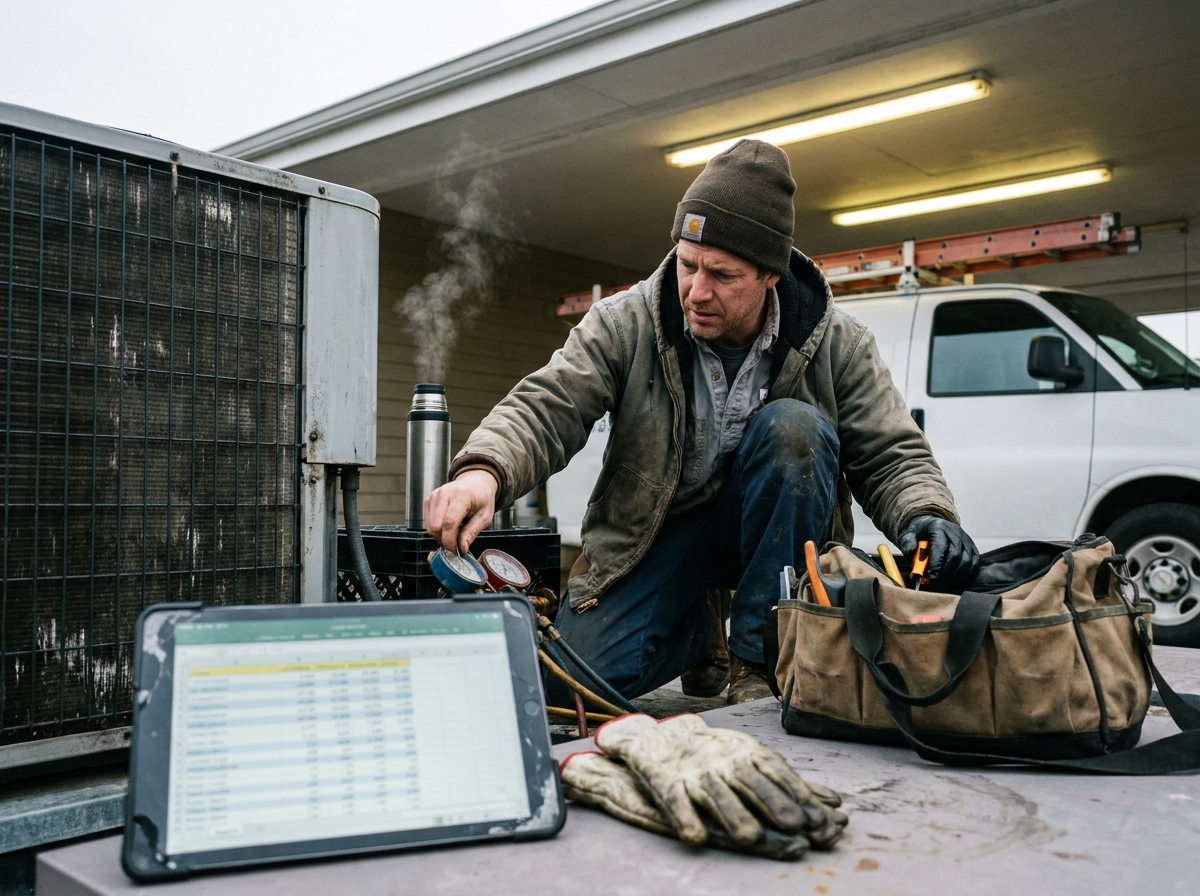
This is also where an HVAC KPIs alternative to ServiceTitan has to be judged carefully. The question is not whether the screen looks polished. The question is whether the system can handle constraints: skills, territories, job duration, priority, parts, customer availability, and the reality that the day changes after the first emergency call. HVAC KPIs software should make those tradeoffs visible enough that a dispatcher can act before the day is already broken.
Good scheduling does not make every metric perfect. It makes cause and effect easier to see. If utilization rises but callback rate follows, the schedule may be too tight. If response time improves but drive time balloons, the routing logic may be favoring urgency without respecting geography. Those are HVAC KPIs tips worth acting on because they connect the metric to a decision.
That is why the dispatch review should happen before the end-of-week postmortem. A dispatcher can still rescue a day when the board shows overstuffed routes, missing parts, or a technician moving away from the next best call. By Friday, the same problem has already become overtime, a callback, or a customer apology.
Building a simple KPI dashboard
A simple dashboard should fit on one screen and survive a busy Monday. Put the six core HVAC KPIs at the top. Under each one, show the trend, the owner, and the next action. Do not build a museum of charts. Build a weekly operating habit: review last week's misses, choose one scheduling adjustment, and check whether the next week moved.
For search, planning, and board reporting, keep the language consistent. Use HVAC KPIs 2026 for the annual planning view, how to improve HVAC KPIs for the operating plan, HVAC KPIs cost when you are tracing lost margin, and HVAC KPIs examples when training a new office manager. Those terms may sound like labels, but they help keep the team from mixing strategy, troubleshooting, and software shopping in the same conversation.
External market references such as Statista can belong in a leadership folder, but the dashboard should stay close to dispatch reality. The owner should be able to ask, "What changed in scheduling, and what number moved because of it?" If the team can answer that every week, the dashboard is doing its job.
The final test is whether the dashboard changes behavior. If it only explains last month, it is accounting. If it helps tomorrow's dispatcher group nearby calls, hold space for urgent work, and send the right technician the first time, it is operations. That is where HVAC KPIs become useful: not as a scorecard on the wall, but as a tighter feedback loop between the schedule and the field.
#HVAC#KPIs#Benchmarks#FieldService#Trades#SkilledTrades#HomeServices#BlueCollar#FieldOps#SmallBusiness#dispatch#scheduling#AI#automation#SaaS#B2B#Productivity